Work / Frame 01 — PCOS Tracker01 of 16
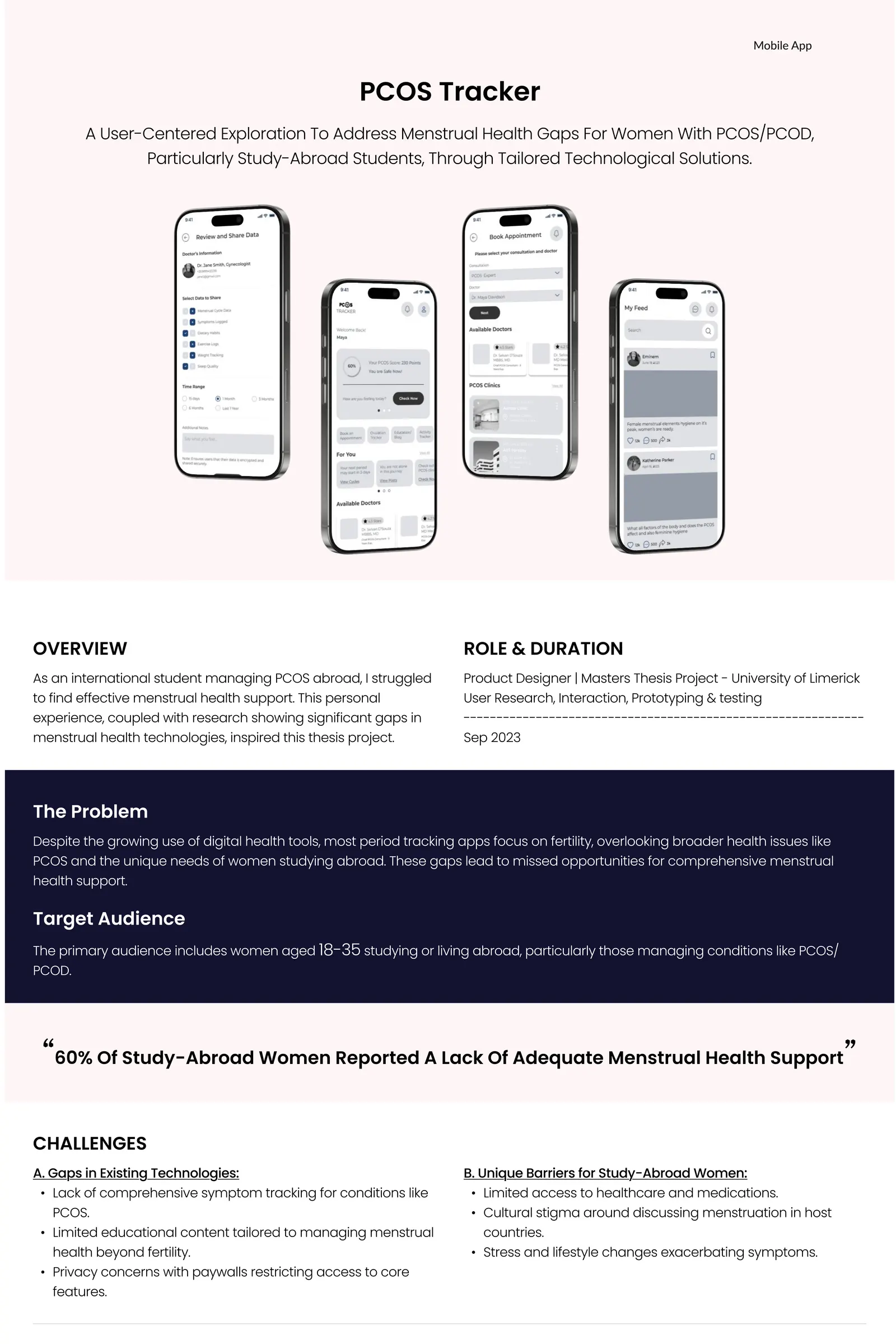
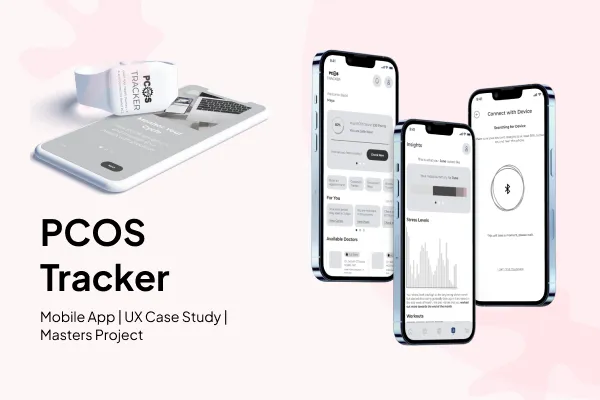
PCOS Tracker
A menstrual health app for women managing PCOS while studying abroad.
CoverMobile app
 600 × 400
- of study-abroad women reported a lack of adequate menstrual health support
- Metric 0160%of study-abroad women reported a lack of adequate menstrual health support
- women surveyed anonymously
- Metric 0233women surveyed anonymously
- app store reviews analysed
- Metric 0360+app store reviews analysed
- competing apps evaluated
- Metric 045+competing apps evaluated
Overview
As an international student managing PCOS abroad, I struggled to find effective menstrual health support. That personal experience, together with research showing significant gaps in menstrual health technology, became the starting point for my Master’s thesis at the University of Limerick. I owned the user research, interaction design, prototyping and testing.
The problem
Despite the growing use of digital health tools, most period-tracking apps focus on fertility. They overlook broader conditions like PCOS and the specific needs of women studying abroad, which means missed opportunities for comprehensive menstrual health support.
- Gaps in existing apps: limited symptom tracking for PCOS, little educational content beyond fertility, and paywalls and privacy concerns around core features.
- Barriers for study-abroad women: limited access to healthcare and medication, cultural stigma around discussing menstruation in host countries, and stress and lifestyle changes that make symptoms worse.
Who it’s for
Women aged 18–35 studying or living abroad, particularly those managing PCOS or PCOD.
Process
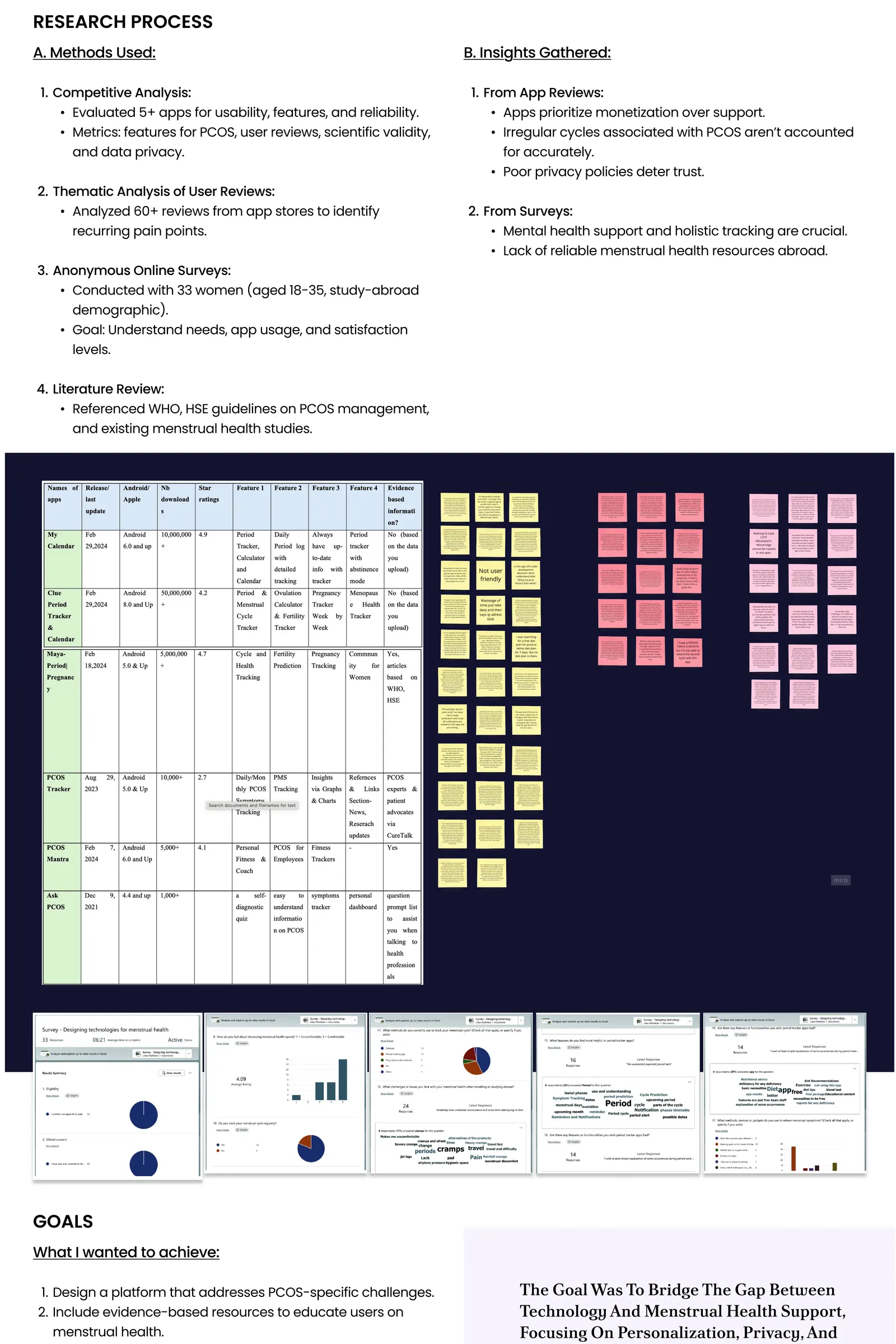
- Competitive analysis: evaluated 5+ apps on PCOS features, user reviews, scientific validity and data privacy.
- Thematic analysis: analysed 60+ app store reviews to find recurring pain points. Apps prioritised monetisation over support, did not account for irregular PCOS cycles, and had privacy policies that deterred trust.
- Anonymous survey: 33 women aged 18–35 from the study-abroad demographic. Mental health support and holistic tracking came through as crucial, alongside a lack of reliable resources abroad.
- Literature review: WHO and HSE guidance on PCOS management, plus existing menstrual health studies.
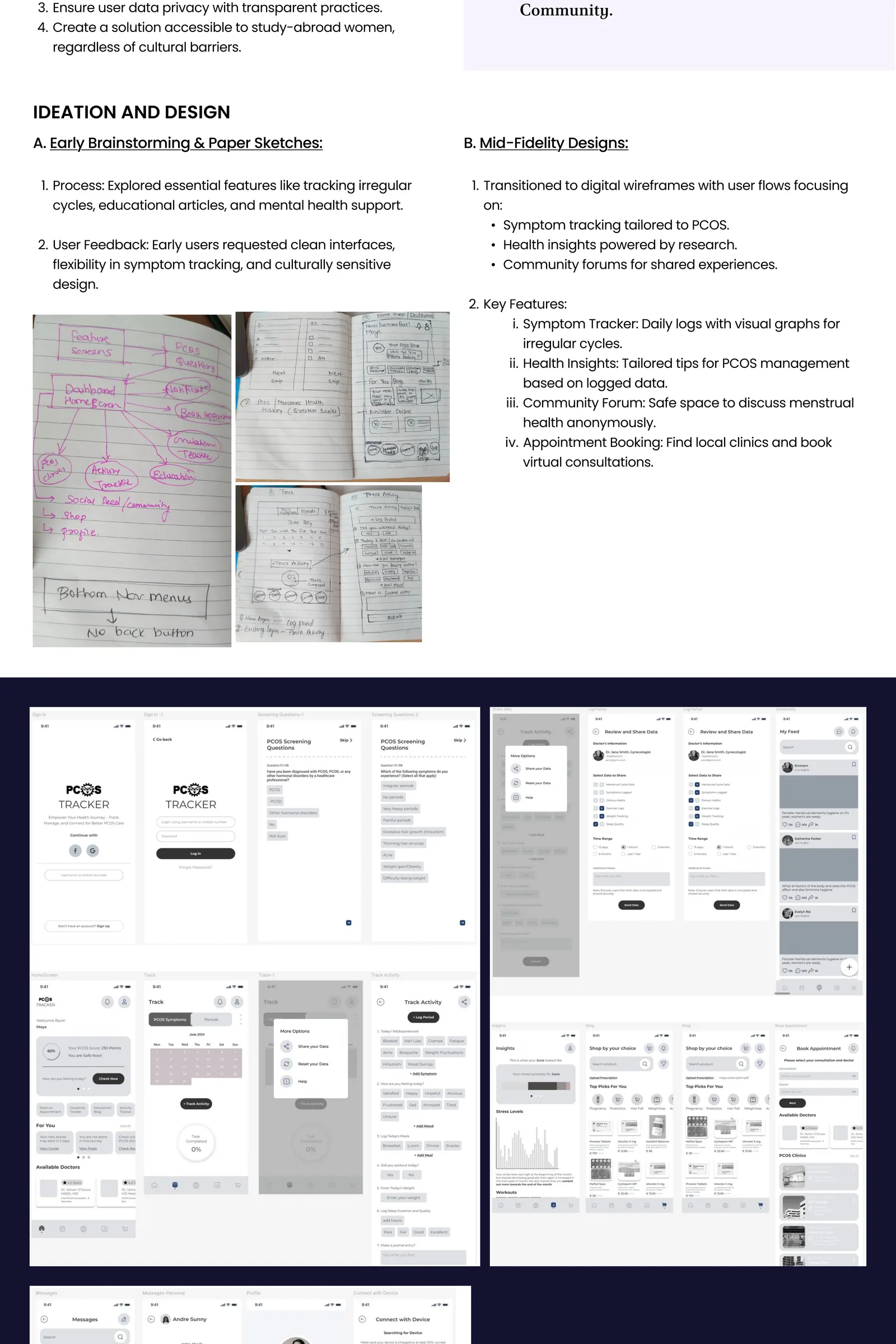
I moved from paper sketches to mid-fidelity wireframes. Early users asked for clean interfaces, flexible symptom tracking and culturally sensitive design.
Key features
- Symptom tracker: daily logs with visual graphs for irregular cycles.
- Health insights: PCOS management tips based on logged data.
- Community forum: a safe space to discuss menstrual health anonymously.
- Appointment booking: find local clinics and book virtual consultations.
Outcome
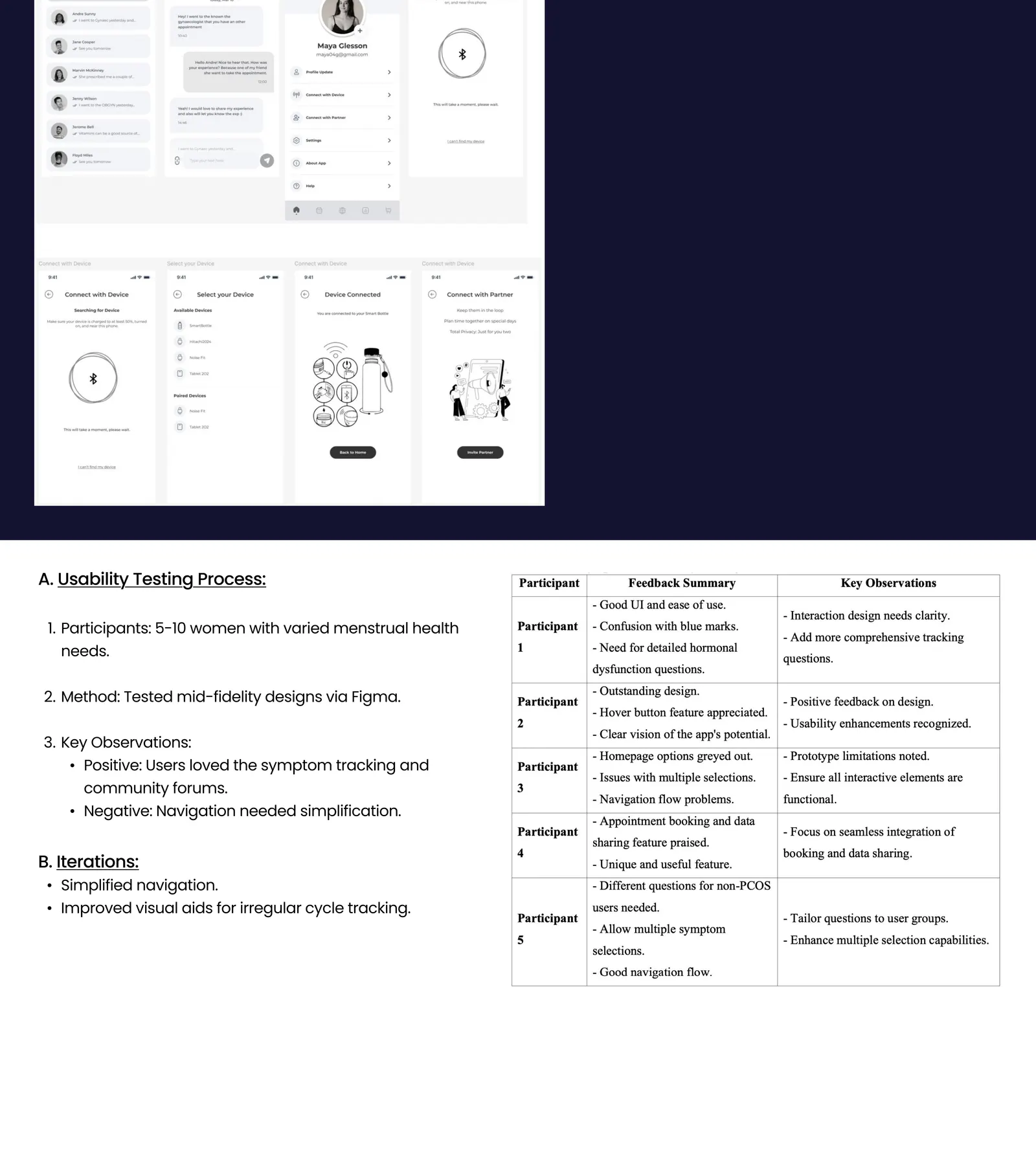
I ran usability tests on the mid-fidelity Figma prototype with 5–10 women with varied menstrual health needs. Participants loved the symptom tracking and community forums, but found the navigation too complex. In the next iteration I simplified the navigation and improved the visual aids for tracking irregular cycles.
Frame — Boards
Screens & process